Academic painter · graphic artist · illustrator
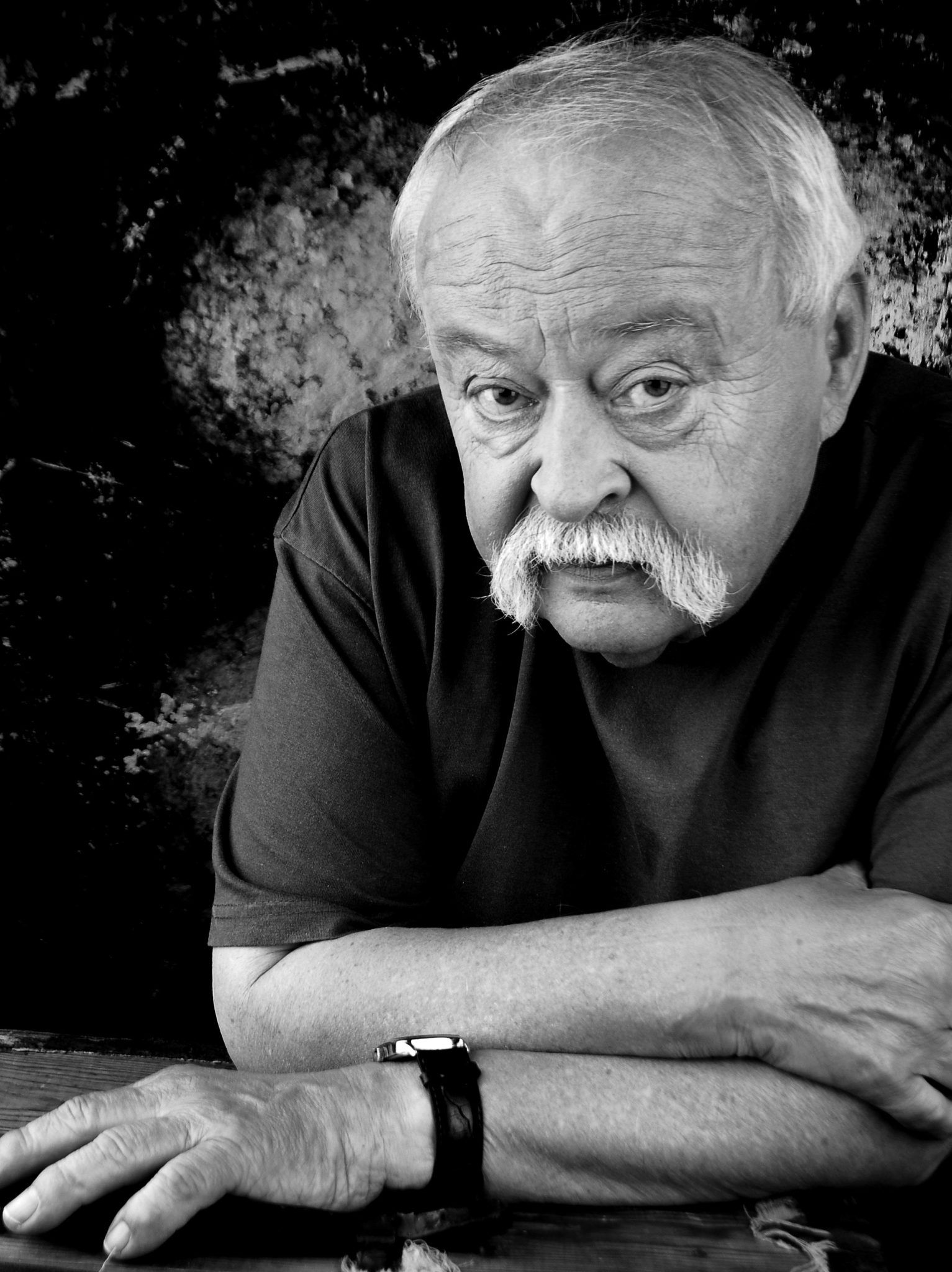
OldřichKulhánek
One of the most significant Czech visual artists of past decades, designer of current banknotes and more than 40 postage stamps
Prague, Czech Republic
About the artist
Oldřich Kulhánek was born on February 26, 1940 in Prague. From 1958 to 1964, he studied at the Academy of Arts, Architecture and Design in Prague, in the studio of Professor Karel Svolinský. He used etching, lithography, and drawing as means of artistic expression (in his early years, also lithographic engraving).
He is the author of Czech banknotes, which he designed in 1992–1993. It is worth noting that he created the first design of a banknote already back in 1971, and his ten-crown bill won an anonymous competition in then-communist Czechoslovakia. However, after the regime discovered that it was him (persona non grata at that time) who created the winning design, his interpretation of the theme Master Paul of Levoča was not used and no anonymous competition was ever called again.
Oldřich Kulhánek designed more than 40 postage stamps, including the one commemorating the 800th anniversary of the Golden Bull of Sicily, which became the Czech Stamp of the Year in 2012. He created over 220 Ex libris (1975–2010) and illustrated numerous books, among them several novels of Karel Čapek.
His work and life were impacted by the era in which he lived. In 1971, he was arrested by state police and accused of defaming leaders of communist countries in his prints created in 1968–1971 (mainly Joseph Stalin depicted in several of his etchings). The case, like many others at the time, was fabricated by the state secret service. After a month in prison, he was released and interrogated every two weeks for two years. In 1973, 11 of his prints, along with 9 works of his colleague Jan Krejčí, were put on trial and sentenced to destruction. Thanks to an indiscretion of one of the judges, Oldřich Kulhánek later learned that the condemned prints had been spared from being burned after all. The judges took them home for their private collections, in other words, stole them. Mr. Kulhánek later said: “At that moment, I realised that even a tragic situation in life never lacks a touch of humour, although admittedly mostly of its very dark kind.”
As a result of the trial, Oldřich Kulhánek was completely banned from exhibiting his work and working with publishing houses as well as the media in the 1970s. Thanks to many friends, however, he never lost contact with the European art scene; in 1971, for example, he participated under the pseudonym Ulrich Böhm in an exhibition celebrating the 500th anniversary of the birth of Albrecht Dürer.
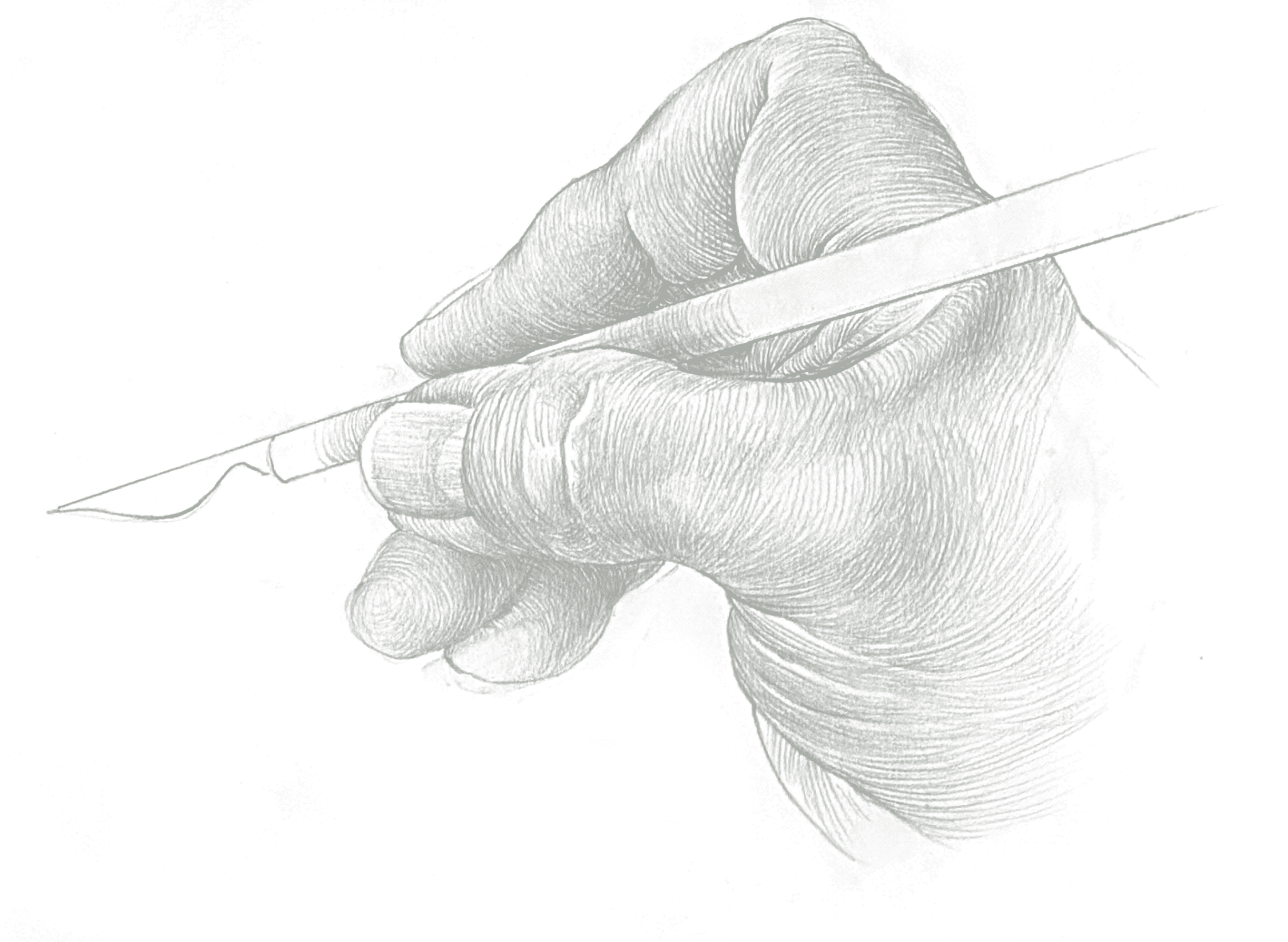
In the 1980s, Kulhánek illustrated his first books. He created lithographs inspired by the human face and human hands, as well as by the work of George Orwell. His pen-and-ink drawing “Temptation” won the silver prize in a book competition on the Faustian theme in Leipzig (it was absurd that the gold prize in the competition on this subject went to a work about Friedrich Engels).
The return of freedom in 1989 allowed Oldřich Kulhánek to focus fully on his art and to create several impressive cycles of lithographs and drawings (“Job,” “Fall,” “Parabola,” “Ecce Homo,” “Funny Money,” “Trial,” and many others). It also opened the door for him to become a guest lecturer at universities in the United States.
Oldřich Kulhánek presented his art at countless solo and collective exhibitions in the Czech Republic (Czechoslovakia) and abroad, for instance in Belgium, the Netherlands, Germany, Austria, Japan and the USA. The United States – Chicago – also hosted one of his largest retrospective exhibitions in 2007.
Oldřich Kulhánek’s works are featured in the world’s most prestigious collections: Library of Congress (Washington, USA), Albertina (Vienna, Austria), Kupferstich-Kabinett (Dresden, Germany), Centre G. Pompidou (Paris, France), the Art Institute of Chicago (Chicago, USA), Bibliothèque Royale (Brussels, Belgium), Stedelijk Museum (Amsterdam, Netherlands), National Gallery (Prague, Czech Republic), and many others.
He received numerous domestic and international awards. He was awarded prestigious prizes at the Biennale Frechen, 2nd Prague Salon, Biennale Ljubljana, 4th Biennial Exhibition of Prints in Wakayama, and other international competitions and shows. This category also includes the Grand Diploma for Graphic Art Tuzla. In 2013 he received the Vladimír Boudník Award for Lifetime Achievement in memoriam. His life attitudes and work have also been recognized on the floor of the United States House of Representatives. In a congressional statement recapping Oldřich Kulhánek’s artistic and civic contributions on the occasion of the Chicago exhibition, Representative Rahm Emanuel thanked the “world-renowned artist … for his dedication to artistic creation and freedom of expression.”
Oldřich Kulhánek served as Chairman of the Czech Postage Stamp Commission and President of the Hollar Foundation.
Artistic legacy of Oldřich Kulhánek was captured in four major publications: “Monograph O. Kulhánek” (1997), “Oldřich Kulhánek: Ex libris 1975–2010” (2010), “Oldřich Kulhánek & Miloš Ondráček: Stamp Design 1990–2011” (2012), and “Oldřich Kulhánek: Courage and Imagination” (2023).
All his life, Oldřich Kulhánek lived and worked in Prague. He passed away on January 28, 2013.
Get in touch
For enquiries about Oldřich Kulhánek’s work, please contact us by email.
info@oldrichkulhanek.com